-
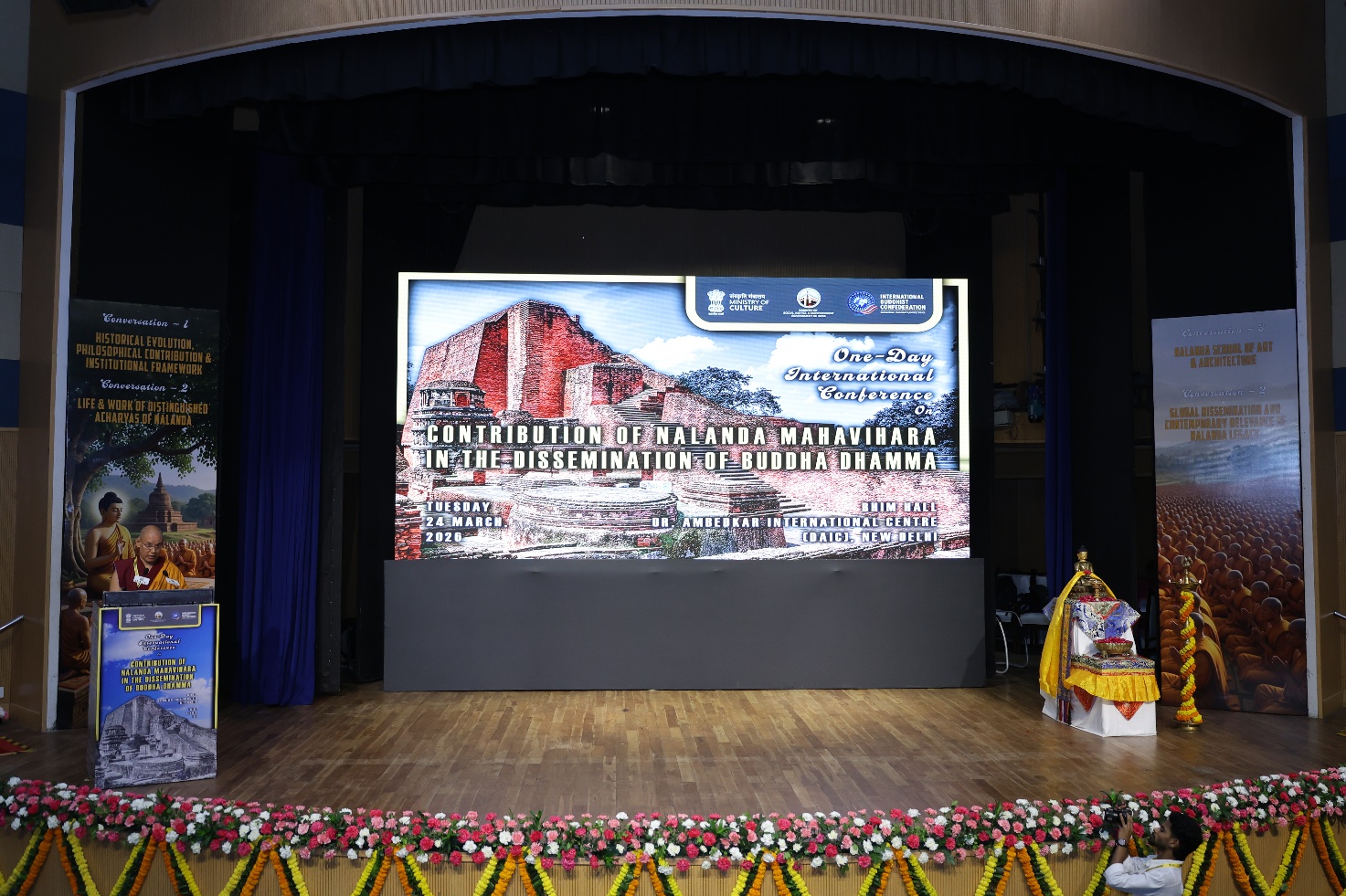
Contribution of Nalanda Mahavira in the Dissemination of Buddha Dhamma

The International Buddhist Confederation (IBC), in collaboration with Dr. Ambedkar International Centre (DAIC), organised a one-day international conference on ‘Contribution of Nalanda Mahāvihāra in the Dissemination of Buddha Dhamma’ at Bhim Hall, Dr Ambedkar International Centre, New Delhi, on 24 March 2026. The inaugural ceremony began with a walk through of an exhibition on 'Guru Padmasambhava – Sacred Pilgrimage Sites in India'.
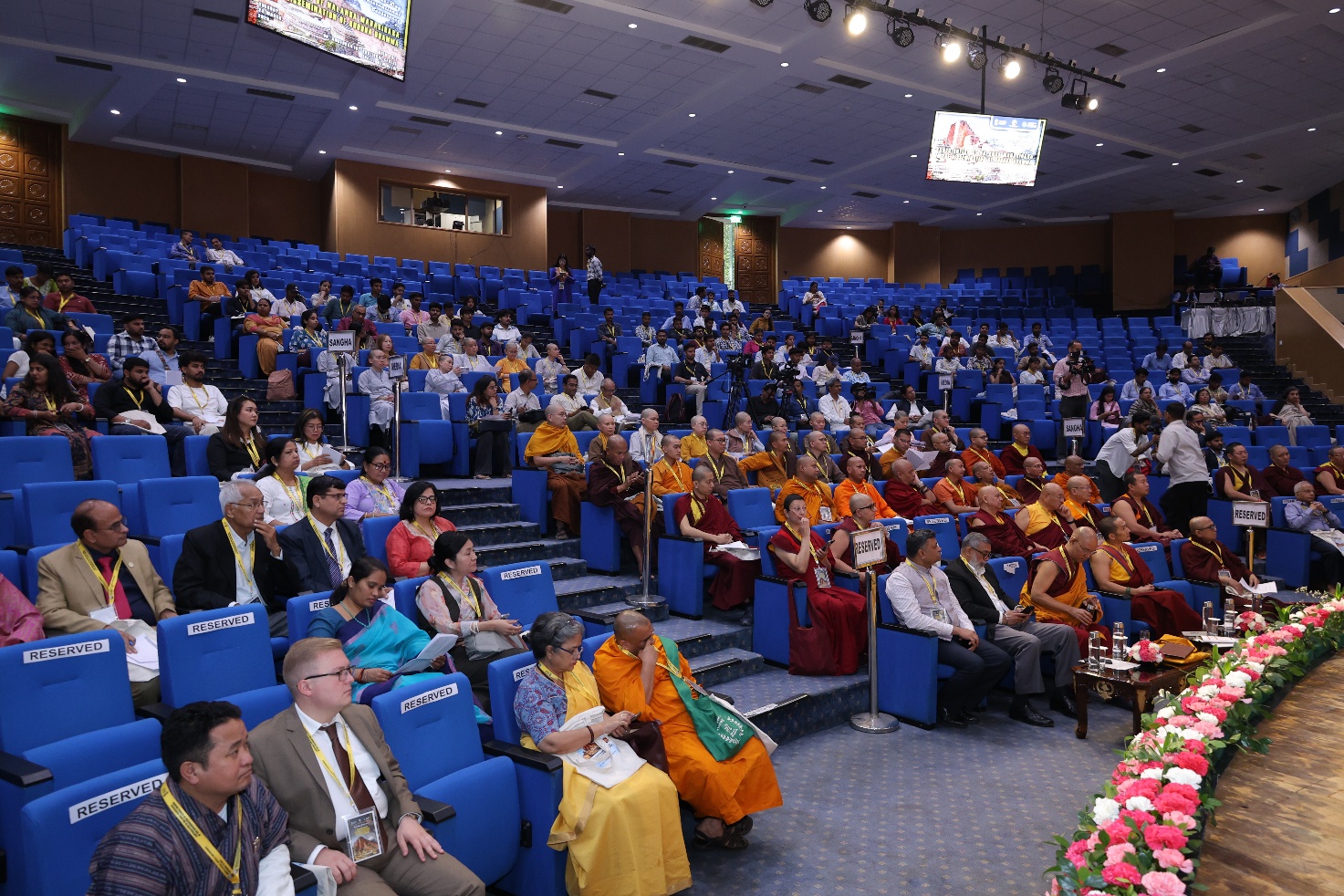
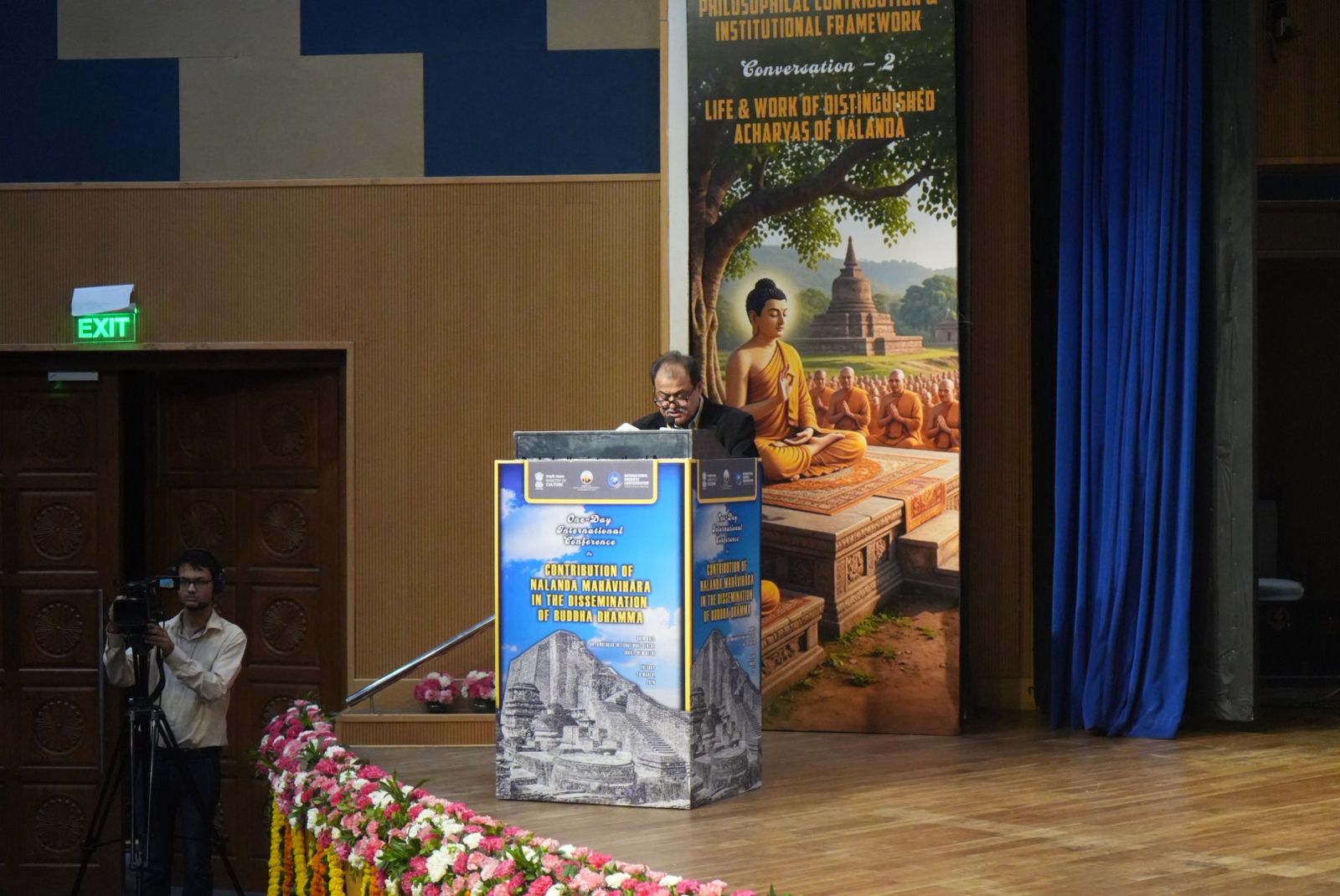
This was followed by invocation of Mangalpath by venerable monks and the Welcome Address by Dr. Ravindra Panth, Director IBC, who emphasised that ‘the main focus of Nālandā was the making of a man’ where the real purpose of this learning-tradition was to shape character and realisation, not just to transmit information. The product of Nālandā was thus a transformed human being, true to the ethical-spiritual sense.
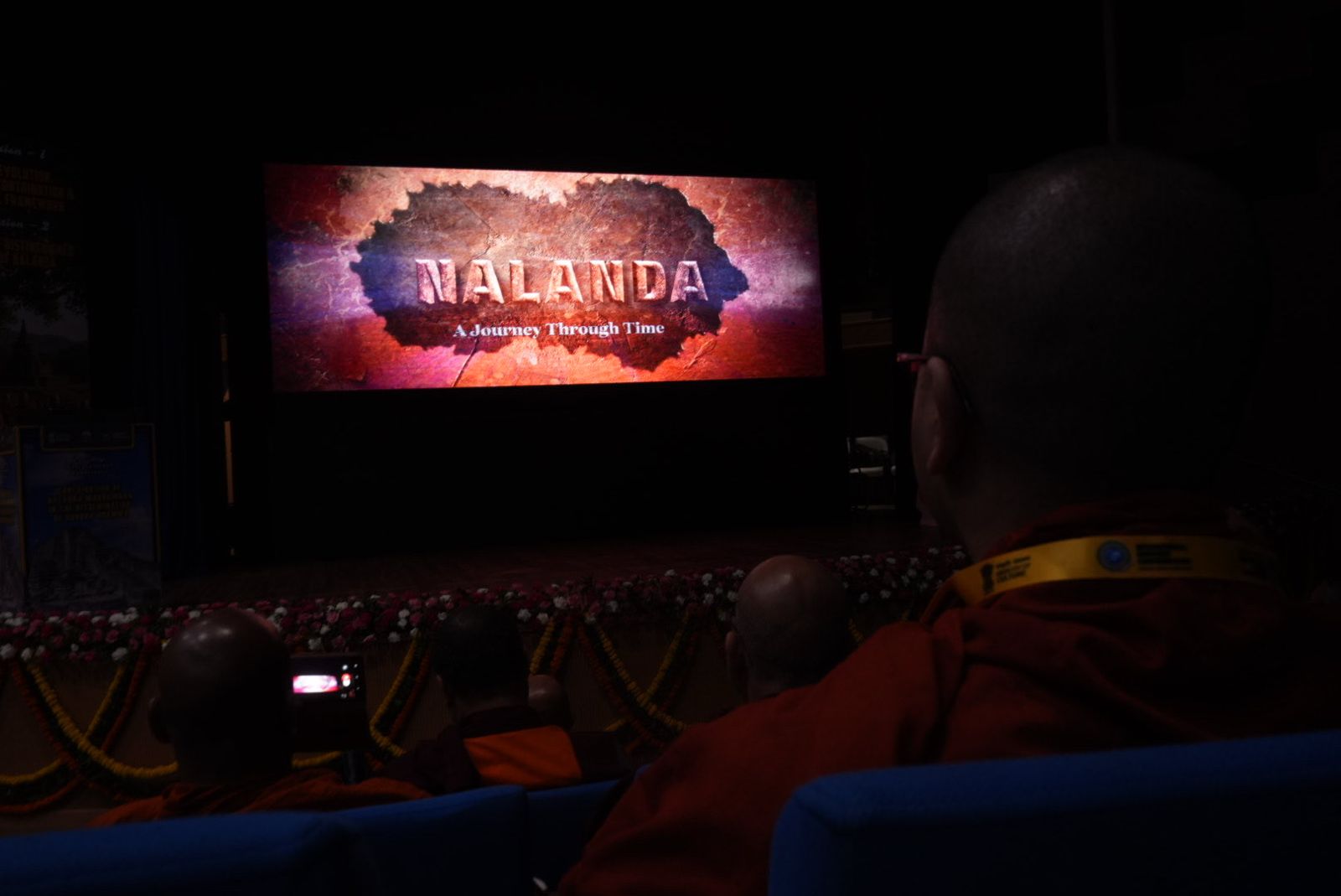
A documentary titled Nalanda a Journey Through Time, directed by Surinder M. Talwar was screened next. It laid out Magadha’s cultural milieu as crucial in shaping Nalanda as an integrated knowledge system, nurturing a holistic Nalanda ecosystem where monastic life, scholarship, pilgrimage, trade and local society mutually reinforced one another.
A Special Address was delivered by Shartse Khensur Jangchup Choeden Rinpoche, Secretary General, IBC. He outlined that the Buddha himself explicitly advised the wise not to accept His words out of mere faith, but to examine them closely, as a goldsmith would test gold. Nālandā took this forest-tradition spirit of inquiry to new levels of sophistication, systematising critical reflection into rigorous disciplines of grammar, logic, medicine, fine arts, and the inner science of the mind. His Holiness 14th Dalai Lama repeatedly highlights that it is precisely this analytical, evidence-friendly Nālandā heritage that unites reason, contemplative practice, and ethics which speak deeply to the modern world and its quest to understand consciousness and cultivate genuine human flourishing.
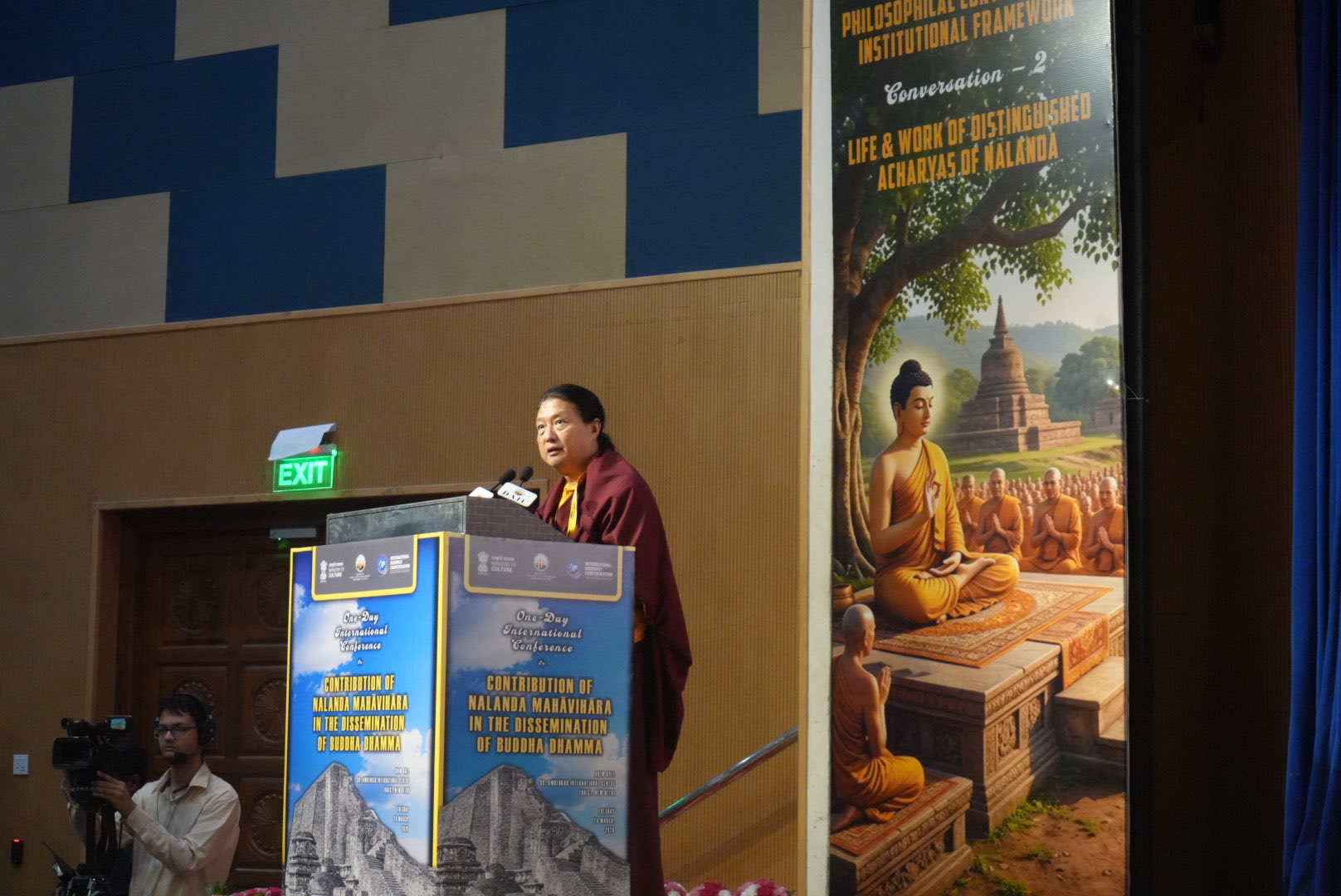
The Keynote Address by H.E. Gyeltrul Jigme Rinpoche, President and Chief, Rigon Thupten Mindrolling Monastery (Padmasambhava Maha Vihara), Odisha, highlighted the basic tenets of the Buddha’s Dhamma as a threefold training: ethical discipline, mental concentration or calmness, and the discovery of truth through insight. These foundations created the inner architecture of the Nālandā enterprise: character formation, disciplined mind, and rigorous inquiry into reality.
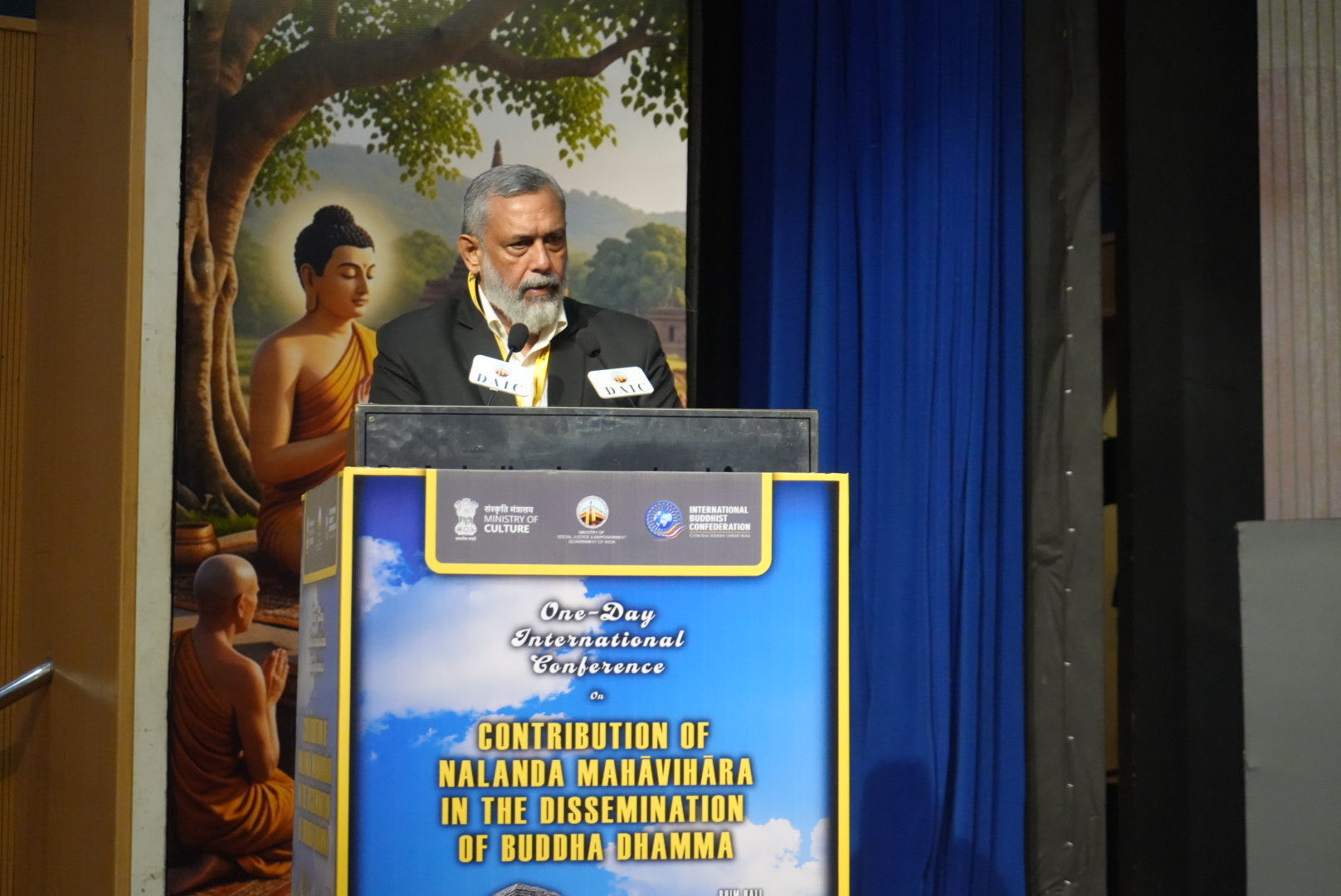
Shri Abhijit Halder, DG IBC, delivered his closing remarks at the conclusion of the inaugural ceremony. He said that for him, personally, Nalanda is a knowledge ecosystem – where it stood as a trans-national intellectual hub, a place where dialogue and openness flourished without dogma, inhibition, or bias. At the end, IBC’s film, Holy Buddha Relics in Kalmykia, Russia was screened.
The conference covered four disciplines and topics in the form of engaging and candid fireside dialogue between speakers and moderators.
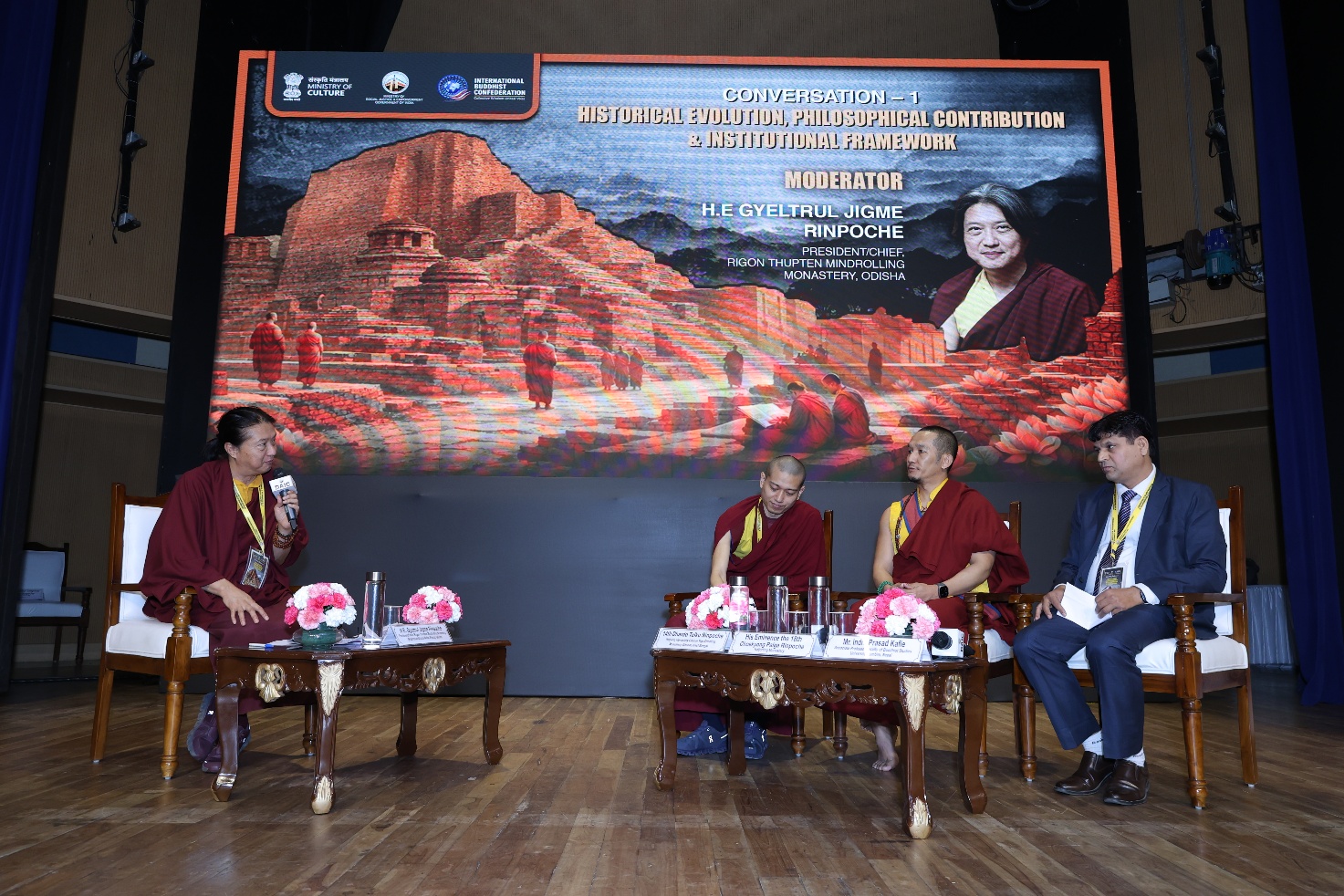
The session was moderated by H.E. Gyeltrul Jigme Rinpoche, President and Chief of Rigon Thupten Mindrolling Monastery (Padmasambhava Maha Vihara), Odisha, India, and included the 14th Dhardo Tulku Rinpoche, Drepung Monastery, Ghoom Yiga Choeling Monastery, Ghoom, West Bengal, India; H.E. The 18th Choekyong Palga Rinpoche, Naljorling Monastery, Ladakh, India; and Mr. Indra Prasad Kafle, Associate Professor, Faculty of Buddhist Studies, Lumbini Buddhist University, Lumbini, Nepal.
The session delved into the theme of evolution, tracing how Buddhist philosophy matured within the Nālandā environment and radiated outward across Asia.
It highlighted the way Nālandā’s scholastic culture — rooted in rigorous debate, commentarial refinement, and interdisciplinary study — transformed early Buddhist teachings into highly sophisticated systems of thought on logic, epistemology, metaphysics, and mind.
The participants examined how the Nālandā-based tradition travelled with scholar-monks and translators, taking root in distant lands such as Tibet, China, Korea, Japan, and Southeast Asia, where it mingled with local cultures and gave rise to rich, regionally distinct expressions of the same intellectual and contemplative heritage.
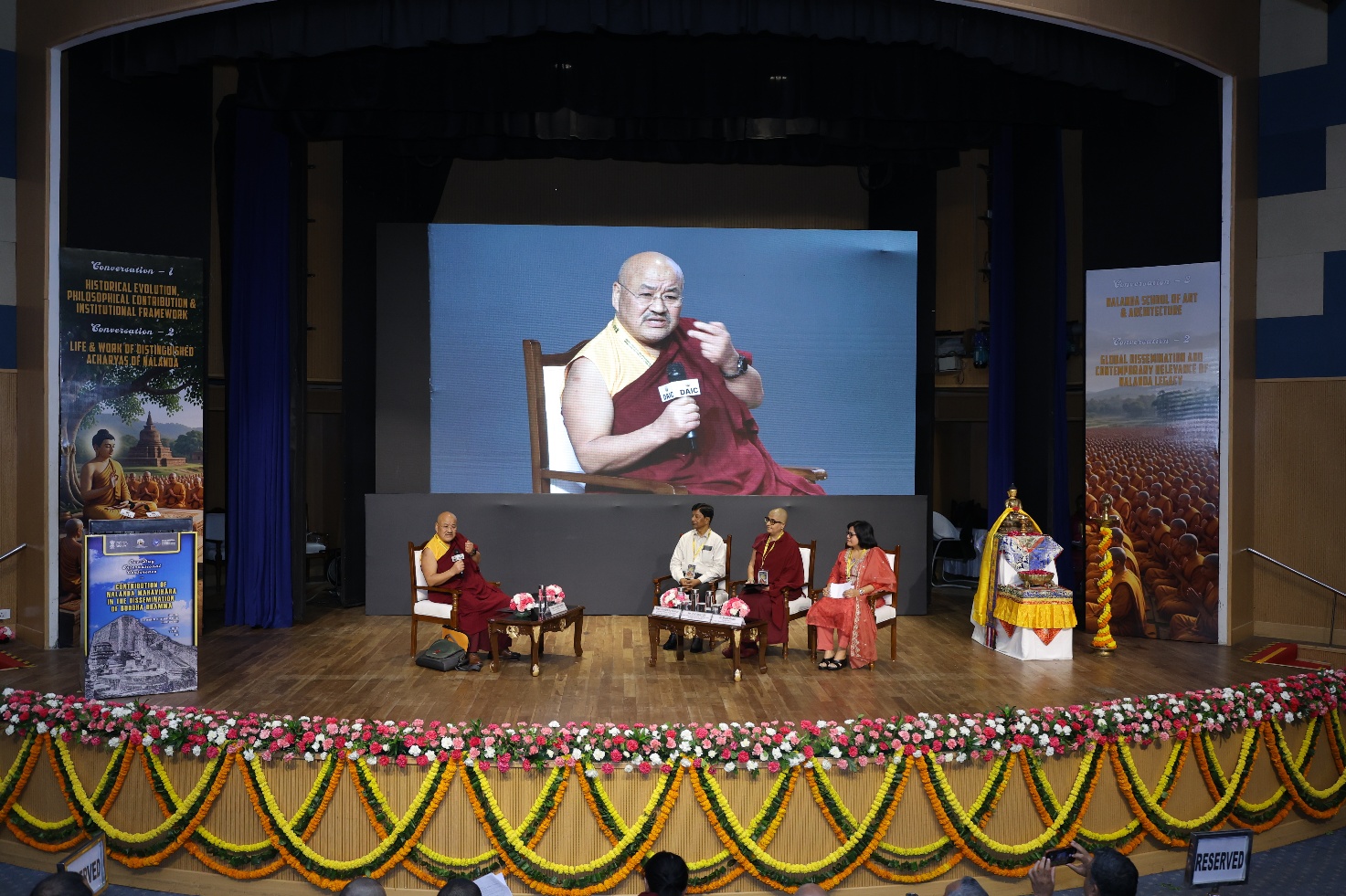
The session was moderated by Lopen Lungtaen Gyatso, President, College of Language and Cultural Studies, Royal University of Bhutan, Bhutan.
The speakers included Prof. Bimlendra Kumar, Professor, Department of Pali and Buddhist Studies, Banaras Hindu University, Uttar Pradesh, India; Ven. Prof. Kaveri Gill, Senior Fellow, Centre for Excellence in Himalayan Studies, Shiv Nadar University, Delhi NCR, India; and Dr. Sharda Poudel, Associate Professor, Faculty of Buddhist Studies, Lumbini Buddhist University, Lumbini, Nepal.
The session explored the life of scholars like Atisha Dipankara and Kamasila. A strong appeal was made to pass the living traditions of these Acharyas to younger generations. The session stressed the need to transmit the methods of critical inquiry and ethical discipline.
In this context, the figure of the awakened being was presented not as a distant ideal, but as a concrete response to contemporary crises: cultivating clarity, compassion, and resilience through practices such as mindfulness. Buddhism, especially as preserved in the living traditions of India, was described as an ‘antidote’ that can address suffering at its root by transforming the mind, rather than merely managing symptoms.
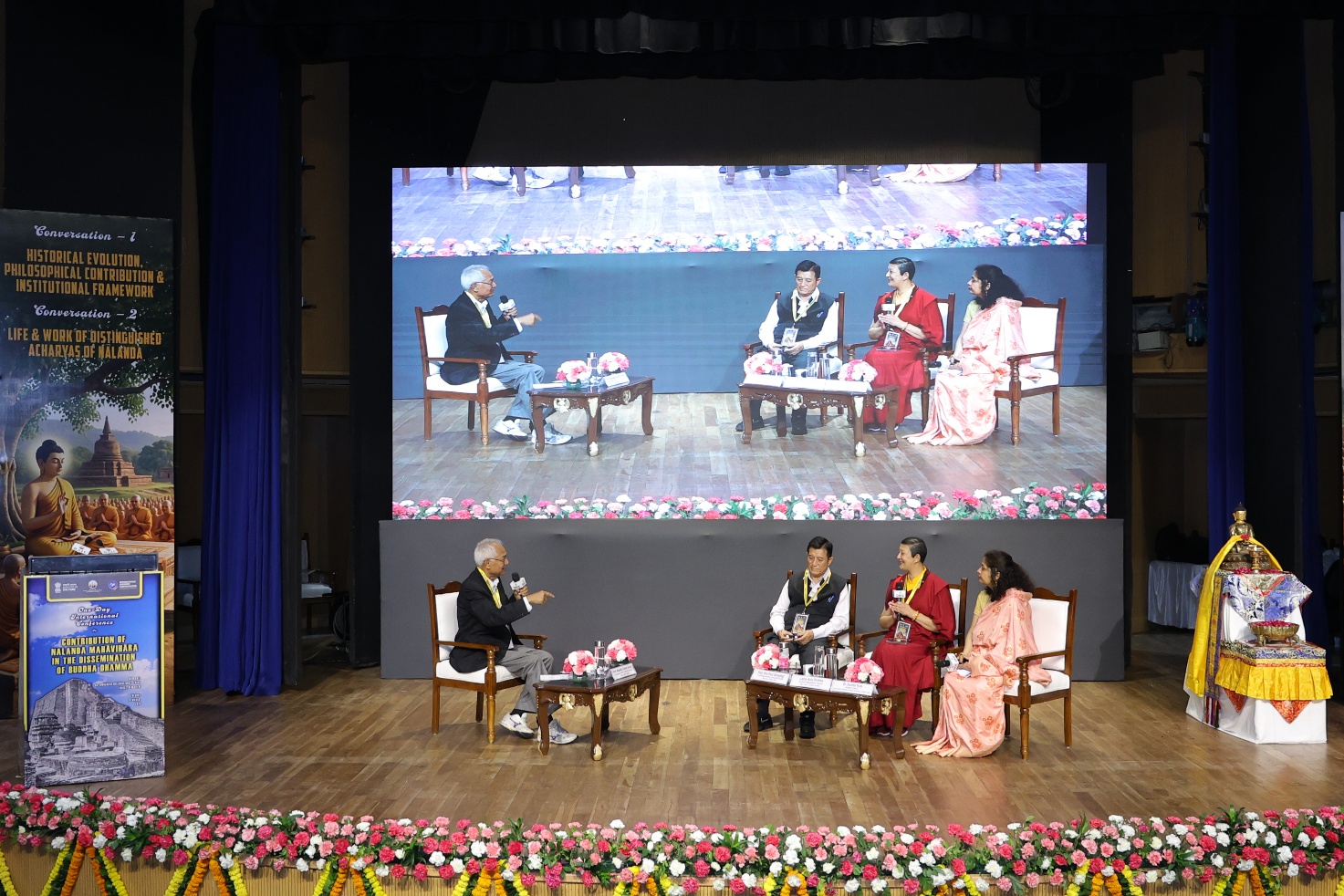
This session was moderated by Prof. Basanta Kumar Bidari, Archaeological Advisor, Lumbini Development Trust, Lumbini, Nepal, and included speakers Prof. Hira Paul Gangnegi, Former Head, Department of Buddhist Studies, University of Delhi, India; Lama Aria Drolma, Buddhist Meditation Teacher, New York, USA; and Dr. Susmita Vyas, Assistant Professor, Department of Buddhist Studies, University of Delhi, India.
The conversation reflected on the very name ‘Nālandā’, evoking its associations with abundant giving and the joy of knowledge, and linking this to the refuge in bodhicitta prayer.
At the heart of the Nālandā legacy, participants were reminded, lies the guiding intention: ‘May we attain Buddhahood for the benefit of all sentient beings’. This altruistic resolve was presented as the inner compass of the tradition and as a sign that the Nālandā spirit survives today as a living tradition rather than a mere archaeological memory.
The session also highlighted Nālandā art that developed a distinctive visual language that both reflected and supported its intellectual and spiritual life. Attention was drawn to the sophisticated use of brick, stucco, stone, and metal, through which artists gave form to Buddhas, bodhisattvas, and complex Vajrayāna deities, as well as to narrative and decorative motifs woven into the very fabric of the viharas and temples.
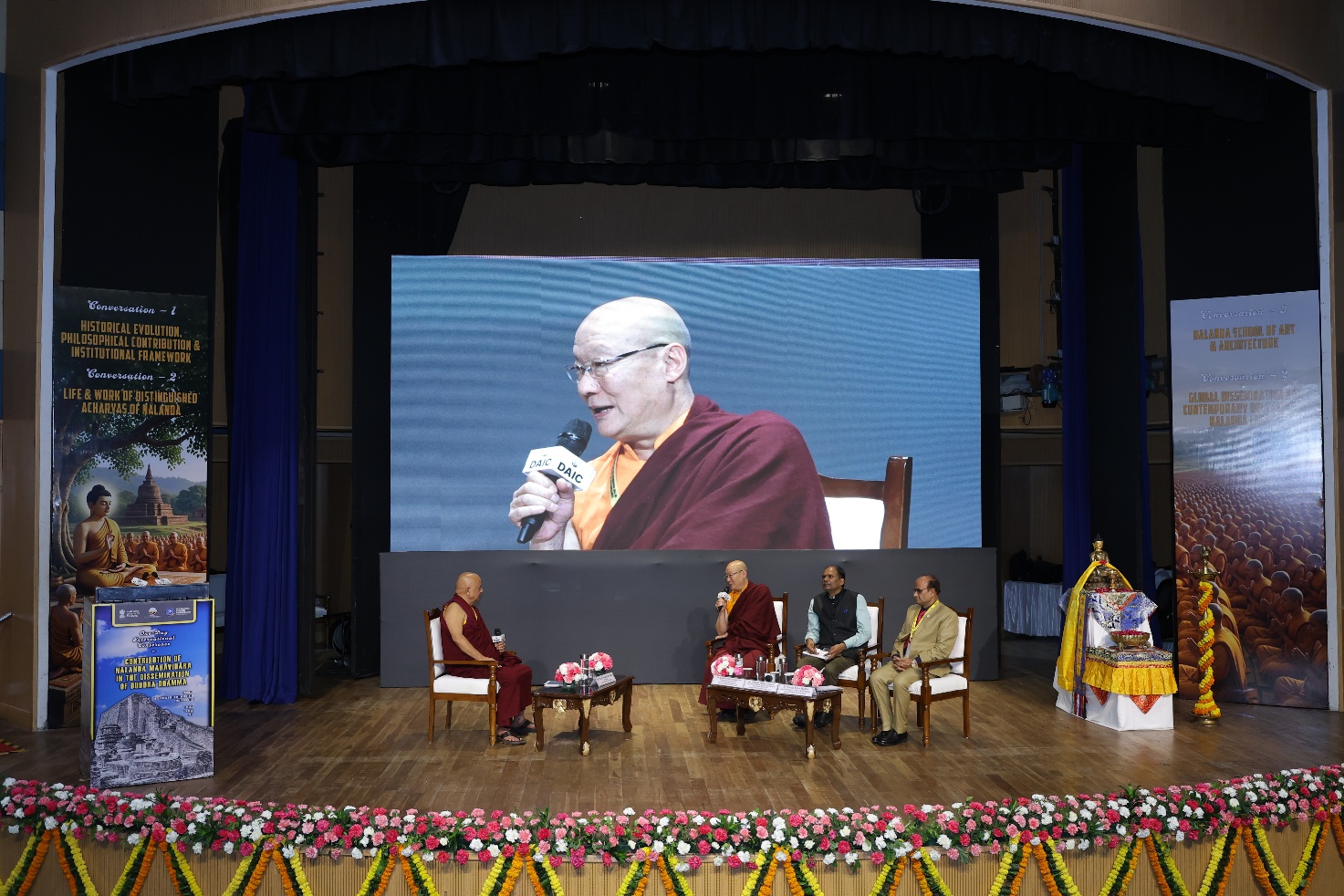
Session 4, the last session of the conference, was moderated by Ven. Prof. (Dr.) Wangchuk Dorjee Negi, Vice Chancellor, Central Institute of Higher Tibetan Studies, Sarnath, India. The speakers were Ven. Shingkhar Rinpoche Ngodup Dorji, Shingkhar Chair, Longchenpa Center (Bhutan), Former National Nyingma Representative, Commission for Religious Organisations of Bhutan, Chair, Asian Interfaith Network on HIV/AIDS (AINA), Bhutan; Dr. Chintala Venkata Sivasai, HOD, School of Buddhist Studies and Civilisation & Director, International Affairs, Gautam Buddha University, Greater Noida, India; and Dr. Fanindra Kumar Neupane, Associate Professor, Faculty of Buddhist Studies, Lumbini Buddhist University, Nepal.
The session examined Nālanda as a living model of civilisational continuity and global transmission of Buddhist learning, framed in intercultural dialogue and intellectual pluralism. Nālanda as a civilizational bridge reconnected ancient methods of inquiry, ethics, and dialogue with contemporary global challenges.
The conversation underlined how current initiatives seek to re embody Nālanda’s role as a meeting ground of cultures and ideas bringing together international students and scholars to engage in questions of sustainability, peace, and global cooperation. In doing so, the revival was portrayed as more than institutional rebuilding; it is an attempt to reanimate a Nalanda style culture where critical thinking, compassion, and cross cultural understanding inform policy, education, and international relations.
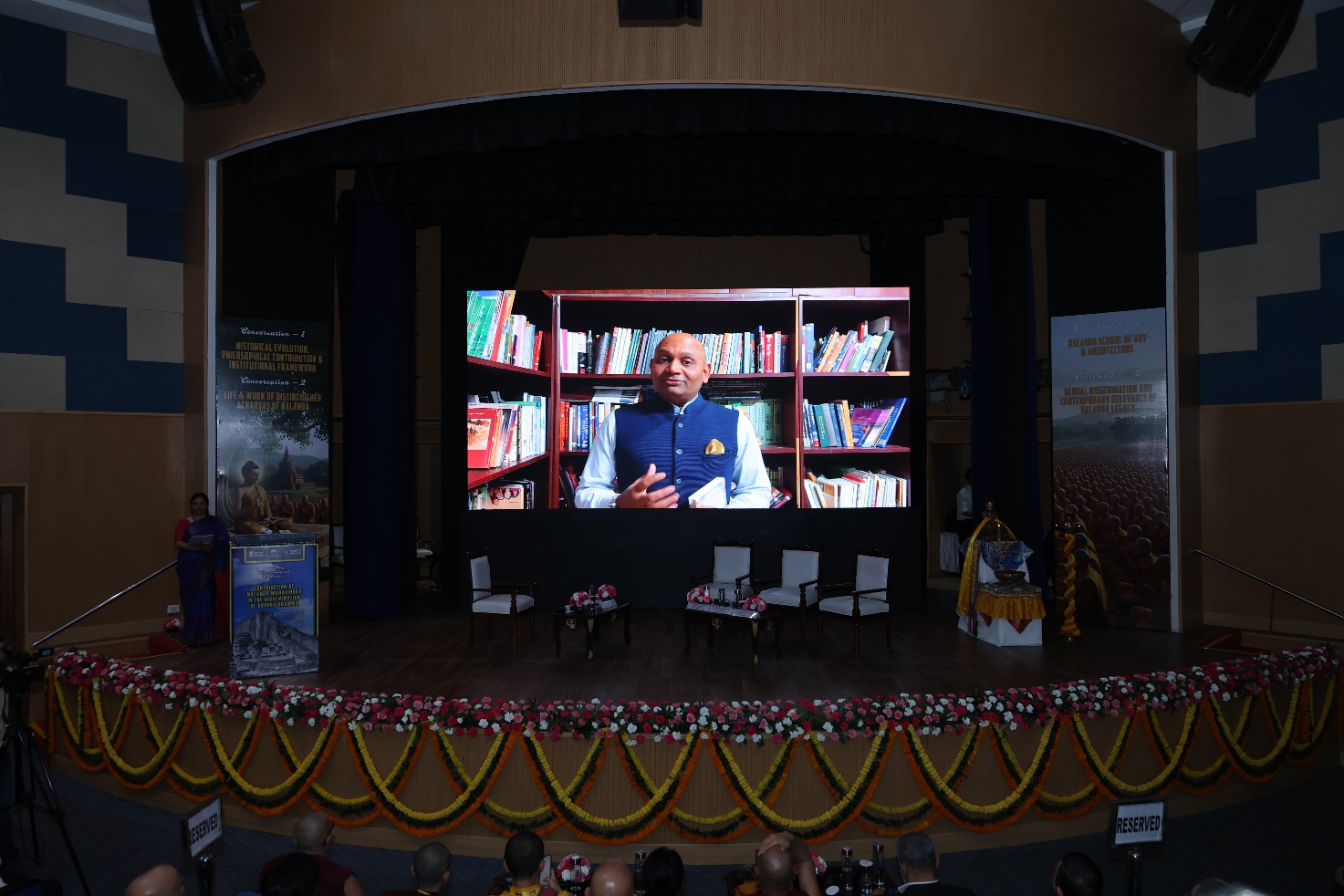
The day-long international conference concluded with a short message from the Indian Ambassador to Azerbaijan, Shri Abhay Kumar, and a Vote of Thanks by Col. Akash Patil, Director DAIC. He expressed his gratitude to the venerable Rinpoches, whose wisdom and presence brought profound spiritual depth to the deliberations. He thanked the venerable monks and nuns who reminded us that knowledge must travel from the head to the heart – only then does it become wisdom. The conference, he said, has truly lived up to its spirit, beginning with the powerful idea that Nalanda is not just an institution – it is a phenomenon.